Patient Guide · 2026 Edition
Endometriosis Help, Diagnosis & Excision Surgery Support
Connect with endometriosis advisors, expert imaging, fertility specialists, and world-class excision surgeons — in one guided pathway.
Your pain deserves to be taken seriously. EndoHelp helps you understand your options and connect with the right specialists.

How it works
How EndoHelp guides you
A calm, five-step patient journey — from your first message to a specialist you can trust.
- 1
Tell us what you are experiencing
Share symptoms, timeline, and prior treatment through a short intake form.
- 2
Review symptoms, imaging, or prior surgery
A patient advisor helps organize your records for structured review.
- 3
Understand your care pathway
Diagnosis, imaging, surgical options, fertility, or second opinion — in plain language.
- 4
Connect with the right specialist team
Matched to endometriosis specialists based on your case, not on advertising.
- 5
Plan treatment, travel, or follow-up
If specialist surgery or cross-border care is appropriate, we coordinate the details.
Care pathways
Where would you like to start?
Plain-language guides to diagnosis, planning, surgery, fertility, and travel — each reviewed for medical accuracy.
Understand
PathwayLearn what's happening in your body — in plain language.
Do I Have Endometriosis?
Recognize the symptom pattern that warrants a specialist evaluation.
- Best for
- New or unexplained pelvic pain
- Next
- Check your symptoms
Symptoms
Common and less-recognized signs across the menstrual cycle.
- Best for
- Understanding your pattern
- Next
- Read the full symptom guide
Diagnosis
The modern diagnostic pathway — history, imaging, and when laparoscopy is needed.
- Best for
- Suspected endometriosis
- Next
- Understand the workup
Plan
PathwaySee your disease clearly before any surgical decision.
MRI & Ultrasound Mapping
Endometriosis-protocol imaging to map disease before surgery.
- Best for
- Pre-surgical planning
- Next
- Learn about mapping
Endomapping
Advanced MRI/US-based mapping for deep and complex disease.
- Best for
- Deep or recurrent disease
- Next
- See how Endomapping works
Choose a Surgeon
What to look for in a surgeon and center for complex excision.
- Best for
- Considering surgery
- Next
- Read the selection guide
Treat
PathwayExcision-first surgical care for complex and deep disease.
Excision Surgery
Complete removal of lesions with pathologic confirmation.
- Best for
- Confirmed endometriosis
- Next
- Understand excision
Robotic Surgery
When robotic-assisted excision may help in complex pelvic anatomy.
- Best for
- Complex or multi-organ disease
- Next
- See when robotics helps
Nerve-Preserving Surgery
Complex excision planned to protect bladder, bowel, sexual, and pelvic function when possible.
- Best for
- Deep or sidewall disease
- Next
- Learn about nerve-preserving surgery
Neuropelveology
When pelvic nerves may be part of complex endometriosis pain.
- Best for
- Nerve-suggestive or post-surgical pain
- Next
- Learn about neuropelveology
Deep Infiltrating Endometriosis
Deep disease affecting ligaments, bowel, bladder, or ureters.
- Best for
- Deep pain, cyclic bowel/bladder symptoms
- Next
- Learn about DIE
Bowel Endometriosis
Rectal, sigmoid, or appendiceal involvement and surgical options.
- Best for
- Cyclic GI symptoms
- Next
- Read the bowel guide
Bladder & Ureter Endometriosis
Urinary tract involvement — diagnosis and surgical planning.
- Best for
- Cyclic urinary symptoms
- Next
- Read the urinary guide
Travel & Support
PathwayFertility, second opinions, and cross-border care when you need it.
Fertility Assistance
Ovarian reserve, endometrioma management, and IVF timing.
- Best for
- Fertility-related endometriosis
- Next
- See fertility options
Failed Treatment / Second Opinion
Structured specialist review when symptoms persist or return.
- Best for
- Prior surgery didn't help
- Next
- Request a review
Surgery in Tijuana
Cross-border care at Hospital CYNTAR with EndoGlobal Group.
- Best for
- U.S./Canadian patients
- Next
- See the Tijuana pathway
All-Inclusive Packages
Bundled imaging, surgery, hospital, and travel coordination.
- Best for
- Cross-border planning
- Next
- View package details
The specialist model
Why specialist care matters
Endometriosis is not always limited to the reproductive organs. Deep and complex disease may involve the bowel, bladder, ureters, pelvic sidewall, nerves, or diaphragm.
NICE NG73 supports the specialist-center model, where advanced gynecologic surgeons work alongside colorectal surgery, urology, imaging, pain, nursing, and fertility services.
See the multidisciplinary team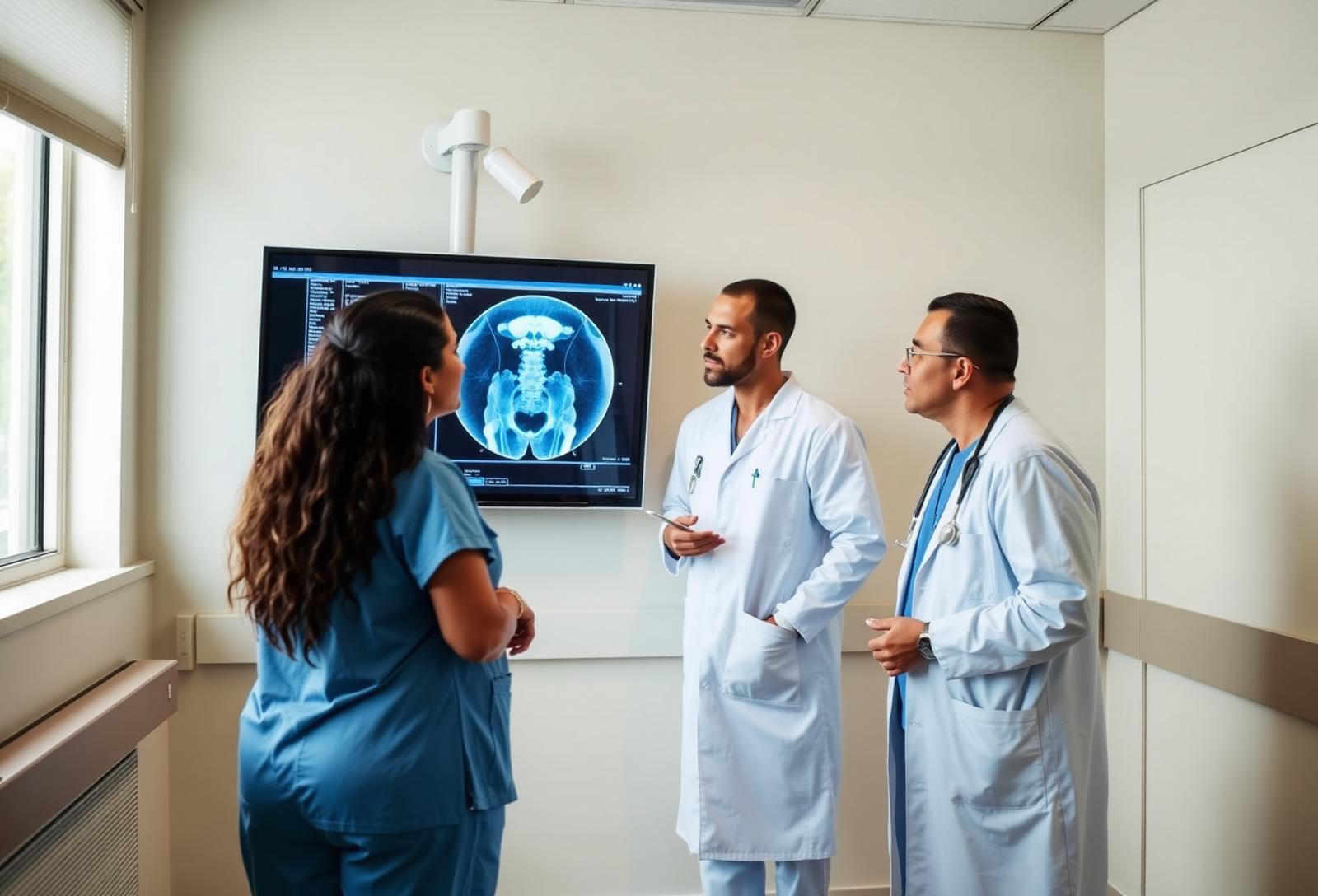
Gynecologic excision surgeon
Leads the surgical plan and performs laparoscopic or robotic excision of endometriosis lesions.
Radiology & Endomapping
Advanced MRI and expert ultrasound to map deep disease before surgery.
Colorectal surgery
Collaborates when endometriosis involves the rectum, sigmoid, or bowel wall.
Urology / urogynecology
Involved for bladder, ureter, or pelvic floor components of disease.
Fertility specialist
Reviews ovarian reserve, endometrioma management, and IVF timing.
Pain, pelvic floor & supportive care
Pelvic floor physiotherapy, pain medicine, and mental-health support.
Institutional pathway
Why patients travel for EndoGlobal care in Tijuana
EndoGlobal Group is an international endometriosis specialist network based in Tijuana, Mexico — a short distance from the U.S. border and San Diego International Airport.
Care is organized around advanced imaging, Endomapping, laparoscopic and robotic excision, and multidisciplinary surgical planning at Hospital CYNTAR and affiliated facilities.
Facts labeled as institutional descriptions are EndoGlobal-reported institutional information.
- International endometriosis specialist network
- Advanced imaging and Endomapping
- Laparoscopic and robotic excision
- Multidisciplinary surgical planning
- Hospital CYNTAR / IIMM care pathway
- Near the U.S. border
Coordinated medical travel
Virtual consult to follow-up
A structured pathway — not a vacation package. Every step is coordinated by the patient team.
- 01Virtual consultation
- 02Fly into SAN
- 03Border transfer
- 04Hotel check-in
- 05Pre-op & surgery
- 06In-person post-op
- 07Remote follow-up
Common questions
Answers, from real specialists
What is endometriosis?
How is endometriosis diagnosed?
Can MRI diagnose endometriosis?
Is laparoscopy still needed?
What is excision surgery?
Is excision a cure?
Patient stories coming soon
We only publish stories with written consent. Individual results vary. Read our testimonials policy →
Educational resources
Related Care Resources
Some related educational resources share a publishing network. Links are selected according to topic relevance.
Fertility & Endometriosis
Cross-Border Fertility
Explore fertility evaluation, IVF, ovarian reserve, egg freezing, and reproductive planning when endometriosis may affect fertility.
Explore fertility educationHospital & International Patient Services
Hospital CYNTAR
Review hospital facilities, advanced gynecology services, international patient support, and care-navigation information.
Explore hospital informationSpeak with an endometriosis advisor
Share your symptoms, prior treatment, and goals. An advisor will help you understand your options and connect you with the appropriate specialists.
Medical review notice
This page was written for patient education and reviewed for medical accuracy by a member of the EndoHelp Medical Review Board.
- Reviewed by
- Dr. Ramiro Cabrera Carranco, MD
- Specialty
- Medical Reviewer — Deep Endometriosis, Gynecologic Endoscopy & Reproductive Surgery
- Content reviewed
- Homepage overview — endometriosis, diagnosis, excision surgery, imaging, fertility, and specialist care.
- Last reviewed
- July 2026
Selected sources
Full reviewer profile · Medical review policy · Editorial policy · References & sources · Network transparency
This content is educational and is not a substitute for professional medical advice, diagnosis, or treatment. Always consult a qualified healthcare professional regarding your individual condition.